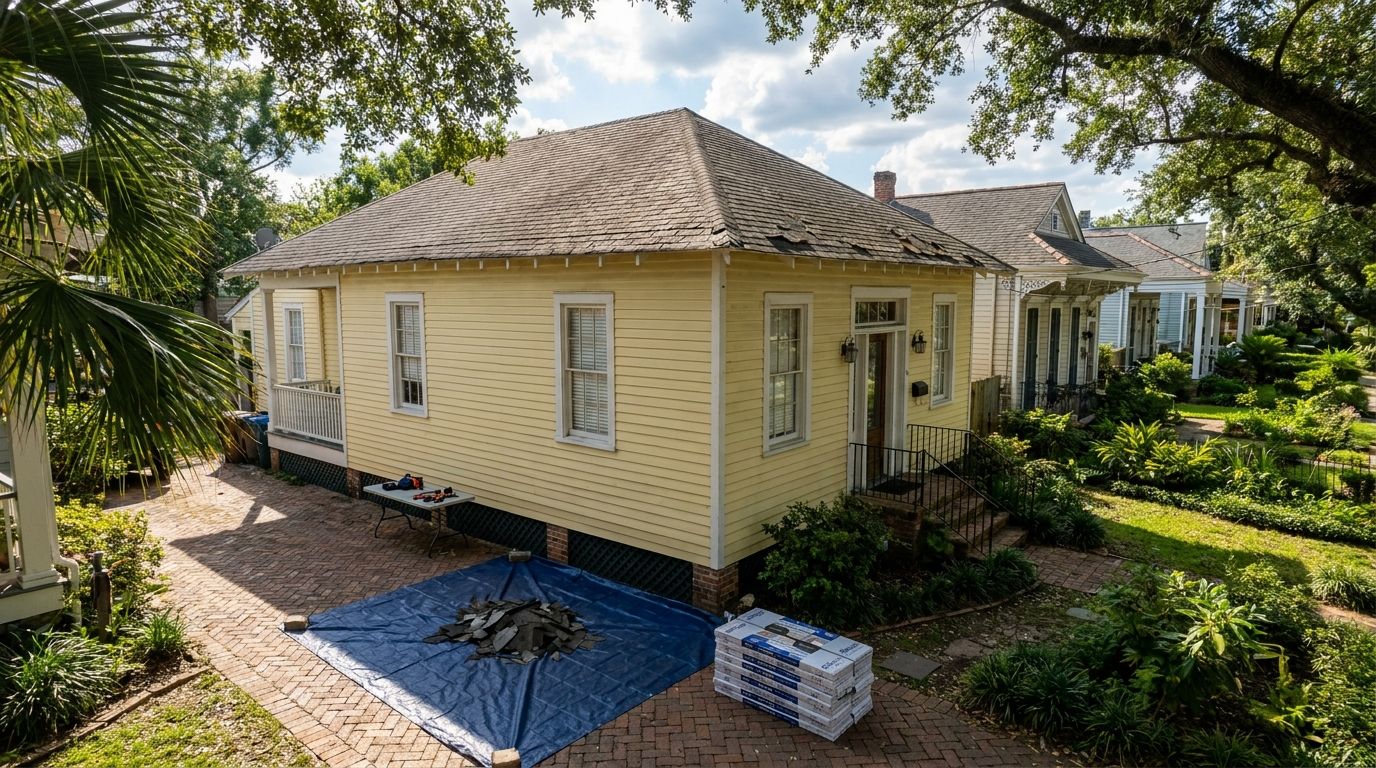
When to Replace a Roof in New Orleans
By Clear Home Team · May 22, 2026
How long roofs last in greater new orleans
Most asphalt shingle roofs in Louisiana give you 20 to 25 years if installed right and kept ventilated. That is shorter than up north because our air stays heavy with moisture and we get more storms than most places.
I have walked roofs from Metairie to the West Bank to Slidell after every named storm since the late nineties. The pattern is clear. Heat cooks the shingles. Humidity keeps them damp. Hurricanes peel back the edges. All of it adds up faster than the warranty on the box suggests.
Proper attic ventilation and good flashing details can push you toward the high end of that range. Skip those and you will be looking at replacement closer to 18 or 20 years.
Signs your roof needs replacement
You do not always need a new roof just because a few shingles are curling. But there are clear signals that the roof has reached the end of its service.
- Granules collecting in gutters and downspouts in large amounts
- Multiple places where shingles look brittle or cracked
- Daylight visible through the roof deck from inside the attic
- Soft spots when you walk on it
- Repeated leaks in the same area after rain
- Missing or buckled shingles along ridges and valleys
If you see three or more of these, it is time to get a close inspection. One or two may only need spot repairs.
From the street I can usually tell a lot by how the ridge line looks and whether the shingles have lost their sharp edges. But nothing beats getting up there with a ladder and checking the flashings around chimneys, vents, and plumbing stacks.
What louisiana weather does to asphalt shingles
Our summers run hotter and longer than the shingle makers planned for when they wrote those 30-year warranties. The sun beats down and the oils in the asphalt dry out. Then the afternoon thunderstorms keep everything wet.
Hurricanes add another layer. Even a glancing blow can loosen the seal tabs. Once water gets underneath, the decking starts to rot. That is when a repair turns into a full replacement.
I have seen roofs that looked fine from the ground but had black mold on the underside of the decking after a few years of hidden leaks. That is not something you want sitting over your head in our climate.
How insurance claims work for older roofs
Many homeowners ask if they can file a claim on an old roof. The answer depends on the damage and your policy.
If a storm caused sudden, direct damage like missing shingles or a torn ridge vent, most policies will still pay. Age of the roof usually affects the depreciation amount, not whether the claim is covered.
We have helped more than a thousand Louisiana homeowners walk through this process. The key is good documentation right after the storm. Photos from the ground, photos from the attic, and a written estimate that separates storm damage from normal wear.
We handle the insurance side so you do not have to fight the carrier alone. Our crew has worked alongside hundreds of adjusters. We know what they need to see and we speak their language.
When to repair instead of replace
Not every problem calls for tearing the whole roof off. A few bad flashings or a section of damaged decking can sometimes be fixed without a full replacement.
If the roof is 12 to 15 years old and only one slope shows heavy granule loss, we may recommend targeted repairs and better ventilation. That can buy you several more years.
But once the shingles are failing across multiple slopes or the decking has widespread rot, replacement is the practical choice. Patching an old roof in our climate is often just kicking the can down the road.
We will tell you straight. If a repair makes sense we will do the repair. If it does not, we will explain why a new roof is the better long-term answer.
Choosing the right material for new orleans homes
Asphalt shingles still make sense for most houses here. They shed water well and they are affordable to replace after the next big storm.
Metal roofing has grown in popularity on the North Shore and in newer construction on the West Bank. It handles high winds better and reflects more heat. Tile and slate look nice but they add weight that older homes may not support without extra framing.
Flat roofs over additions and garages need different attention. We use modified bitumen or TPO systems that can stand up to ponding water during heavy rains.
Whatever material you choose, the details matter more than the brand name. Proper underlayment, correct flashing heights, and good ventilation keep a roof dry in our humid air.
What to expect during a roof replacement in greater new orleans
We send the same crew that gave you the written estimate. They start in the morning and most jobs finish in two to three days depending on size and pitch.
First we pull the old shingles and inspect the decking. Any rotten wood gets replaced before the new underlayment goes down. Then the new shingles or metal panels are installed with attention to all the valleys, ridges, and penetrations.
We clean up every day. When the job is done you get a final walk-through and all the manufacturer warranty paperwork.
Our guys are GAF Certified and we are an Owens Corning Preferred Contractor. We also hold a HAAG Certified Inspector on staff so we can document storm damage accurately for insurance purposes.
Storm restoration experience matters here
Living in Greater New Orleans means every roof eventually meets a hurricane or a strong line of thunderstorms. That is why we keep 24/7 emergency response available.
After Ida we had crews on roofs from Chalmette to Mandeville within hours of the winds dropping below 45 miles an hour. We know how to secure tarps, how to work with FEMA when needed, and how to get your insurance claim moving quickly.
That experience shows up in the way we build roofs too. We pay extra attention to the fasteners along the eaves and rake edges because we have seen what happens when the first wind gust finds a weak spot.
Maintaining your roof between replacements
A little work each year can stretch the life of your roof in our climate. Keep gutters clear. Trim tree limbs that hang over the house. Check the attic for proper ventilation at least once a year.
Walk around the house after every hard rain and look for new stains on the ceiling or wet spots in the attic. Catch small leaks early and you may avoid a much bigger problem later.
If you are not comfortable getting on a ladder, give us a call. We would rather do a free visual inspection than have you risk a fall.
New Orleans roofs fight a tougher battle than most. Knowing when it is time to replace yours can save you from water damage and bigger repair bills down the line.
If you are noticing any of the signs we talked about, or if a recent storm has you wondering about your roof, reach out. We will come take a look and give you a clear, written estimate within 24 hours.
Keep reading
Ready to talk through your roof?
Licensed Louisiana roofing contractor. Free assessments. No high-pressure sales.