Roof Insurance Claim Timeline in New Orleans After a Hurricane
By Clear Home Team · May 22, 2026
What a typical roof insurance claim looks like here
After a Gulf storm rolls through Greater New Orleans, the first thing most homeowners notice is missing shingles or a blue tarp two houses down. We have walked hundreds of roofs from the North Shore to the West Bank after hurricanes. The insurance claim process follows a pretty set order, but the clock starts the day you report the damage.
Louisiana law sets clear deadlines. Carriers must acknowledge your claim within 30 days of notice. They then have another 30 days to inspect, investigate, and either pay or deny it. That is the 30-day rule people ask about most. In practice, storms stretch these windows because every adjuster in the state is suddenly busy.
First steps right after the storm
Call your insurance company as soon as it is safe. Take photos of the whole roof and any interior water spots from the ground or a ladder if you have one. Write down the date and time you called and the claim number they give you.
- Document every conversation
- Keep all text messages and emails
- Note any standing water or downed trees on the property
Do not start tearing off the old roof yourself. Insurance companies like to see the damage exactly as the storm left it. We tell every neighbor the same thing: document first, then decide on repairs.
The inspection and estimate phase
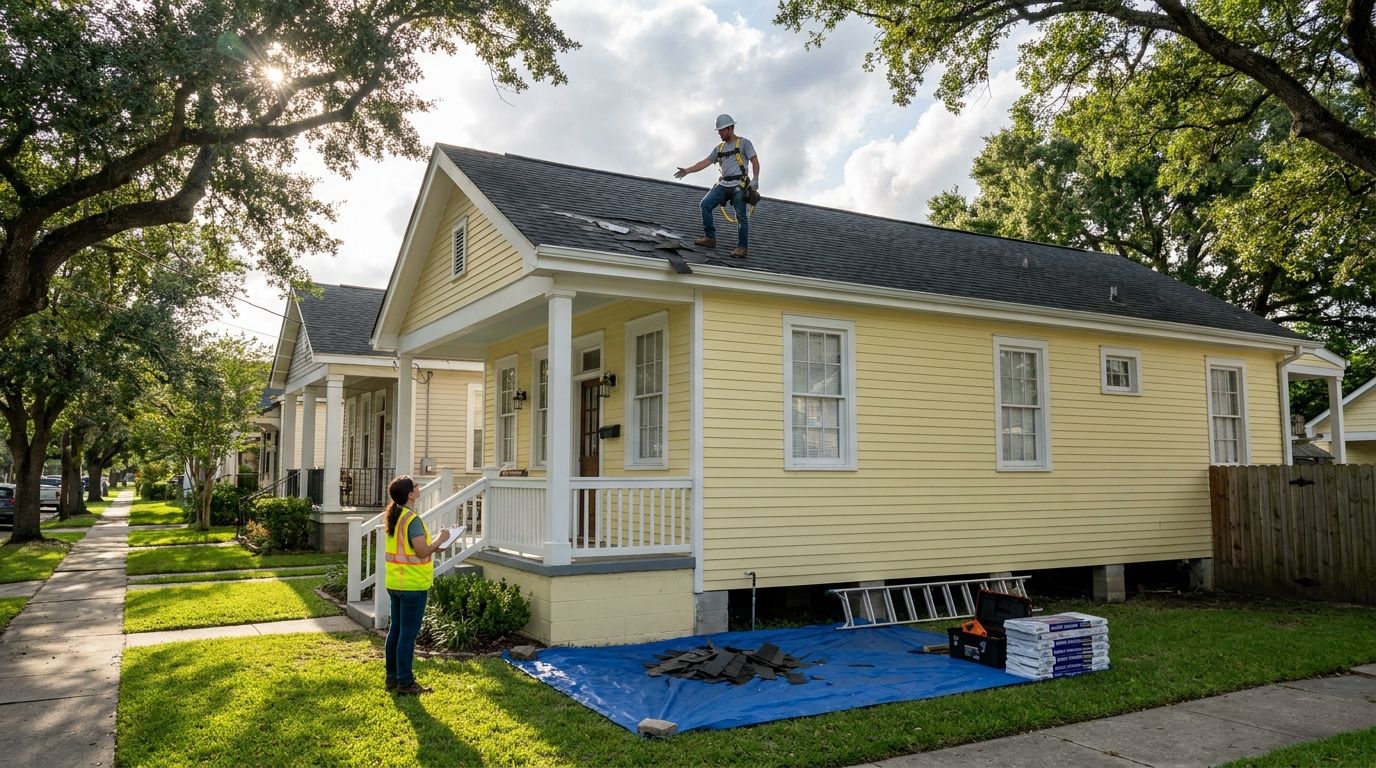
Most carriers send an adjuster within two weeks of your call, but after a big hurricane it can run longer. The adjuster climbs the roof, takes measurements, and looks for hail, wind damage, or water intrusion. They write an estimate based on what their guidelines allow.
In Greater New Orleans we see three common sticking points. First, older asphalt shingles often get flagged for wear instead of storm damage. Second, hidden decking rot under the shingles may not show until we start tearing off. Third, many policies have percentage deductibles that feel bigger once the numbers come in.
If the adjuster’s numbers look low, you have the right to ask for a second inspection or send your own roofer’s estimate. We have sat on hundreds of these re-inspections with carriers and know what documentation they need to move the claim forward.
Why claims drag on in Louisiana
The question we hear most on the phone is “Why is my insurance claim taking so long?” After a named storm the entire system gets backed up. Adjusters work 12-hour days. Desk reviewers in other states handle hundreds of files. Supplemental claims for hidden damage add more steps.
Louisiana’s bad-faith statutes give carriers incentive to pay on time, but they also give them 30 days after they receive all information before penalties kick in. That means every missing photo or unsigned form resets their clock. We keep a checklist so nothing falls through the cracks.
Common delays we see every season:
- Waiting on engineer reports for wind versus flood questions
- Disputes over whether the roof was properly maintained
- Partial payments that leave you short for full replacement
- Slow responses from third-party administrators handling overflow claims
How a local roofing crew helps move your claim
We do not work for the insurance company. We work for you. Our job is to document the damage clearly, pull the right permits, and make sure the scope of work matches what your policy actually covers. Over 1,000 Louisiana claims have gone through our crews since we started.
When we walk a roof with an adjuster we point out the subtle signs a desk reviewer might miss: lifted granules from wind-driven rain, small hail dings that line up in patterns, or soft spots in the decking that only show after the shingles come off. We take detailed photos and measurements that match the carrier’s software.
Our same crew that starts your job finishes it. No revolving door of subcontractors. That matters when you are dealing with insurance because continuity in the paperwork keeps the claim on track.
What to expect week by week
Week 1: File the claim and document everything. Secure any immediate leaks with a tarp if needed.
Weeks 2-4: Adjuster inspection usually happens. You receive the first estimate.
Weeks 5-8: Any supplements or re-inspections take place. This is when most supplemental payments for decking or underlayment get added.
Weeks 9-12: Final approval and payment. Louisiana law requires carriers to pay undisputed amounts within 30 days of receipt of satisfactory proof of loss.
These are averages. A straightforward shingle roof on a single-story house in Metairie might close in six weeks. A complex slate roof on the North Shore with hidden water damage can stretch past four months if engineers get involved.
Red flags that your claim needs attention
If you have not heard from an adjuster after 21 days, follow up in writing. If the carrier asks for the same information twice, that is a sign their file is disorganized. And if they send a check that does not cover obvious damage, you do not have to accept it as final.
We review every estimate that comes across our desk for free. Sometimes the difference is just a matter of proper code language or matching the existing roof type. Other times it is a flat-out lowball on labor hours needed in our humid, windy climate.
Protecting your roof until the claim closes
While the paperwork moves, keep water out of the house. A good temporary tarp properly fastened buys you time. We have emergency response crews that can tarp any pitch, any height, any time of day or night. That service is available whether you use us for the full roof or not.
Once the claim is paid, do not wait too long to replace storm-damaged shingles. Louisiana sun and rain will turn small problems into big ones in a single season. A roof that is 70 percent good after a hurricane rarely stays that way for long.
Getting the right help for your situation
Every roof and every policy is different. What works for a tile roof in the French Quarter may not apply to a metal roof out in Slidell. The only way to know your exact timeline and scope is to get eyes on your specific house.
We have been through this cycle with neighbors across the Greater New Orleans area for more than 20 years. Our crews are GAF Certified, Owens Corning Preferred, and we hold a HAAG Certified Inspector on staff. Louisiana State Contractor License HI.565176 keeps us fully insured and bonded.
If your roof took a hit in the last storm and you are staring at a pile of insurance papers, give us a call. We will walk the roof, explain what we see, and help you understand where your claim stands. No pressure, just straight talk from a crew that actually does the work.
Keep reading
Ready to talk through your roof?
Licensed Louisiana roofing contractor. Free assessments. No high-pressure sales.