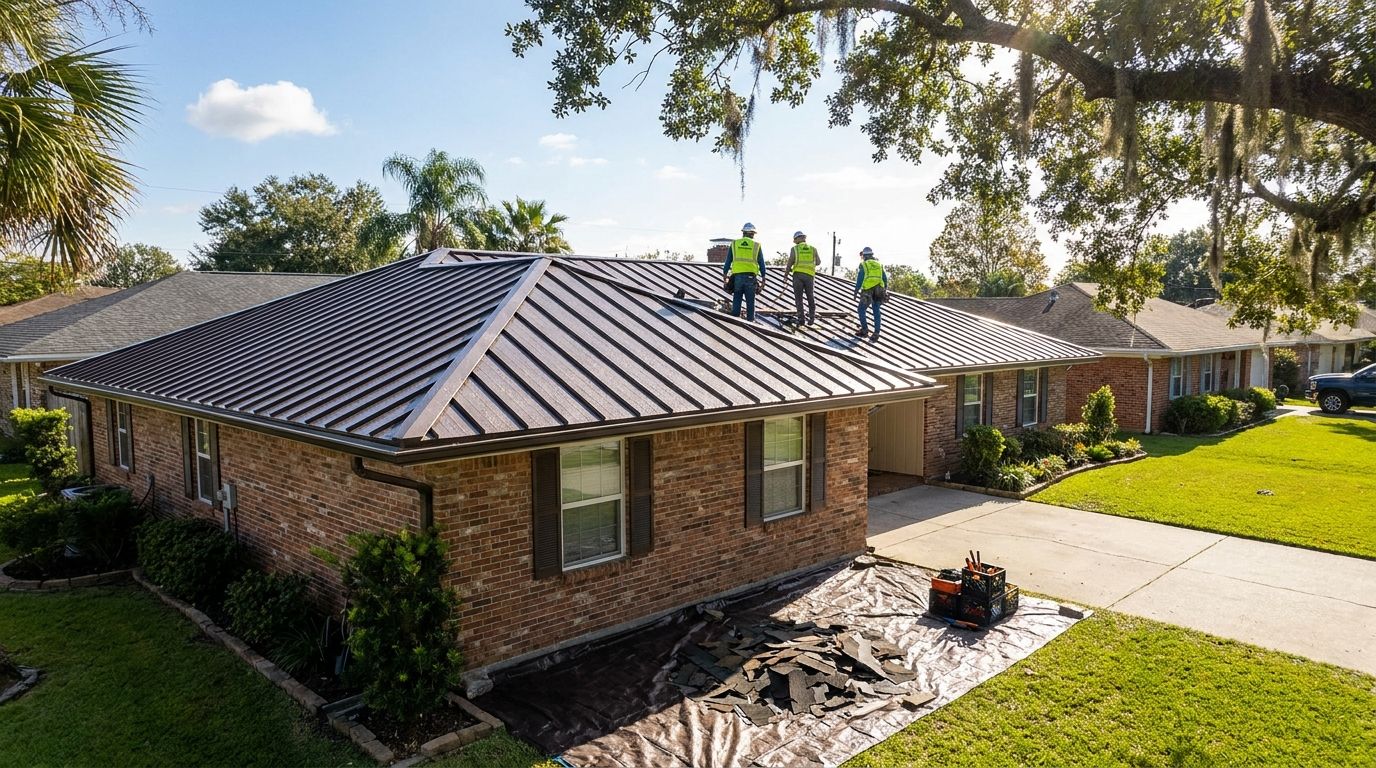
Metal Roof Installation in Kenner: A Real Storm-Season Case Study
By Clear Home Team · May 22, 2026
Why this Kenner homeowner called us in April
Every spring the same conversation happens on front porches from Kenner to Metairie. The roof took a beating over winter, insurance is dragging their feet, and the first tropical disturbance is already forming down in the Gulf. That is exactly what happened at a single-story ranch on Vintage Drive in Kenner.
The owner had lived through enough named storms to know asphalt shingles were not going to cut it anymore. He wanted a roof that could handle 140-mile-per-hour winds without losing half the decking. We sat on his carport, looked at the satellite photos from the last hurricane, and walked the whole house together.
We do not push metal on every job. Some homes still make more sense with high-wind shingles. But when the decking is solid and the homeowner plans to stay put for the next twenty years, metal becomes the practical choice.
What the roof looked like before we started
The existing three-tab shingles were only eight years old but already showed heavy granule loss on the south-facing slopes. Several ridges had lifted where the previous crew had not used enough nails. In the attic we found water stains on the plywood that never showed up inside the house yet.
Kenner sits low, just a few feet above sea level in places. That means wind-driven rain finds every weakness. The previous roof had been installed right before a big storm season and the crew cut corners on the underlayment. We see that pattern a lot around here.
Hail from the spring line of thunderstorms had left dime-size dents across the entire west slope. Most insurance carriers in Louisiana still consider that cosmetic, but we documented every square foot with our HAAG-certified inspector so the adjuster had clear evidence.
The insurance claim process the right way
We have walked more than a thousand Louisiana claims in the last two decades. The key is simple: document everything before you touch the roof. Our crew photographed every shingle, every vent, every pipe boot. We pulled a core sample so the adjuster could see the decking condition.
The carrier approved a full replacement because the hidden water damage pushed the scope past the recoverable amount. That is when the homeowner made the upgrade decision. Instead of another layer of shingles, he chose to go with standing-seam metal.
We explained the difference in warranties, wind ratings, and long-term maintenance. No pressure, just the facts from jobs we have done from Slidell to the West Bank. He asked good questions about color, noise, and whether his HOA would push back. We already knew the answers because we have done several Kenner neighborhoods.
Choosing the right metal roof system for South Louisiana
We went with a 24-gauge standing-seam panel in a dark bronze finish. The color matches the brick on most Kenner ranch homes and does not show the dirt that collects after every thunderstorm. The panels lock together with a double-fold seam that has tested to over 180 miles per hour in wind tunnels.
Under the metal we installed a full synthetic underlayment and added ice-and-water shield in all the valleys and around every penetration. In our climate that extra step prevents the small leaks that turn into big headaches during a slow-moving tropical storm.
The homeowner liked that the metal roof weighs less than a second layer of shingles. His trusses did not need any reinforcement. That saved time and kept the project on schedule before the serious heat of summer arrived.
How the installation week went
Our same four-man crew showed up every morning at 7:30. No rotating subcontractors. The first day we tore off the old shingles and inspected every sheet of plywood. Two small sections needed replacement where the water had softened the wood. We only replace what is necessary.
By day two the new underlayment was down and the metal panels started going up from the bottom edge. Each panel is cut on site with a electric shear so the ridges line up perfectly with the existing architecture. Kenner homes often have odd angles where the carport meets the main house. Getting those transitions right is what separates a good roof from one that fails at the first tropical depression.
The ridge vent we installed is baffled to keep the rain out while still letting the attic breathe. That is critical in our humidity. A hot attic shortens the life of any roof, metal or asphalt.
We finished the flashing details around the chimney and the bathroom vents with lead-coated copper. Twenty years from now those details will still be holding tight.
What the homeowner noticed first
The biggest surprise for him was how quiet the house stayed during the next heavy rain. Metal roofs can be noisy if they are installed wrong. We use solid decking and enough clips so the panels do not oil-can in the wind.
Energy bills dropped almost immediately. The reflective properties of the metal keep the attic 15 to 20 degrees cooler than the old dark shingles. In Kenner that matters when your air conditioner runs from April until November.
He also liked the clean lines. From the street the roof looks like it belongs on the house instead of sitting on top of it. That matters in neighborhoods where curb appeal decides resale value.
Storm season performance so far
We finished the job in late May. Since then the area has seen two named storms and several strong thunderstorms with straight-line winds over 70 miles per hour. The metal roof has not moved. No loose panels, no lifted ridge caps, no new leaks in the attic.
That is the kind of performance we expect. We have installed similar systems on homes that went through Ida in 2021. The difference between a roof that survives and one that ends up in the trees often comes down to the fastening schedule and the quality of the flashing details.
We still drive by the house after every big rain. Old habits from twenty years of chasing storms. The homeowner sends us a text when another band of weather comes through. So far the only message has been “roof is dry as a bone.”
Is metal right for every Kenner home
Not at all. Some houses have pitch that is too low for metal without major modifications. Others have architectural details that make the transition cost more than the long-term benefit. That is why we always start with a thorough inspection and give you straight answers.
If your roof is less than ten years old and only has minor damage, we will tell you to repair it and wait. If you are looking at a full replacement and plan to stay in the house, we will walk you through the numbers on metal versus impact-rated shingles.
The decision should be practical, not emotional. Our job is to give you the real pros and cons so you can sleep through the next hurricane season.
What we check before recommending any upgrade
Every roof we look at gets the same checklist. We look at decking condition, attic ventilation, chimney flashing, plumbing vent boots, and the overall structure. We measure the pitch on all sides because even a few degrees changes what materials work best.
We also talk about insurance. Some carriers give discounts for metal roofs in wind-prone zones. Others do not. We help you ask the right questions before you sign anything.
Our license is HI.565176. We carry proper insurance and bonding. The crew that starts your job finishes your job. That consistency matters when you are dealing with storm damage and insurance adjusters.
If you live in Kenner or anywhere across the Greater New Orleans area and your roof has taken hits from the last few seasons, give us a call. We will come out, walk the roof, and give you a written estimate within 24 hours. No pressure, just clear information from a contractor who has seen what these Gulf storms can do.
Keep reading
Ready to talk through your roof?
Licensed Louisiana roofing contractor. Free assessments. No high-pressure sales.