Hurricane Roof Damage Checklist for Greater New Orleans Homes
By Clear Home Team · May 22, 2026
Why a hurricane roof damage checklist matters in Greater New Orleans
Living along the Gulf means every June through November we keep one eye on the weather. A named storm can peel back shingles, lift ridge vents, or drive rain under your decking in ways that aren’t obvious from the ground. Having a clear checklist helps you stay ahead of small problems before they turn into big repairs.
I’ve walked hundreds of roofs from the West Bank to the North Shore after storms like Ida and Zeta. The patterns are familiar. Shingles curl or go missing on the windward side. Flashing pulls away from chimneys. Soffit vents get hammered with debris. A simple checklist keeps you from missing the important stuff.
Before the storm: simple prep steps you can do now
June is the time to get your roof ready instead of waiting for the National Hurricane Center to issue a watch. Start on the ground and work your way up safely.
- Walk around your house and secure loose yard items that could become projectiles.
- Trim any tree limbs that hang over the roofline.
- Check gutters and downspouts for debris so water can flow freely.
- Inspect visible flashing around vents, chimneys, and valleys.
- Make sure your attic access is clear in case you need to check for leaks later.
If you have a older home in neighborhoods like Lakeview or Gentilly, pay extra attention to the ridge line. Older asphalt shingles get brittle here and lift easier in high winds.
Right after the storm: safety first
Do not climb on a wet or damaged roof. That’s how serious injuries happen. From the ground or a safe ladder position you can still gather plenty of information.
Look for these signs without stepping foot on the shingles:
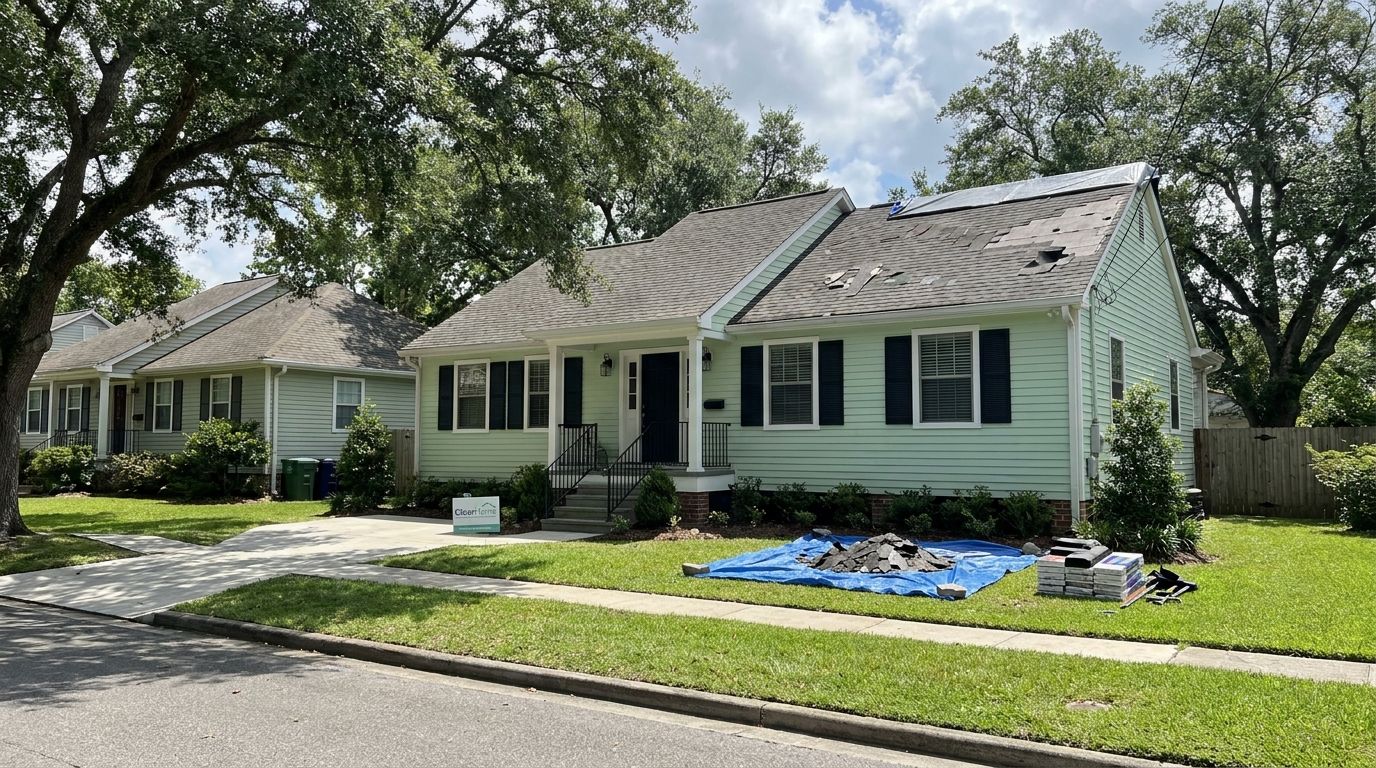
- Missing or torn shingles, especially on the side that faced the wind.
- Granules piled in gutters or on the driveway.
- Bent or missing ridge cap shingles.
- Dents or cracks in metal flashing.
- Pooling water on flat roof sections or around skylights.
- Debris stuck in vents or under eaves.
If you see any of these, stay off the roof and document everything before calling for help.
What to look for inside your house after hurricane winds and rain
Water finds the smallest opening. Check these spots as soon as it’s safe:
- Ceiling stains or active drips in top-floor rooms.
- Wet spots on interior walls near the ceiling.
- Musty smells in closets or along exterior walls.
- Blisters or soft spots in sheetrock.
- Water around recessed light fixtures.
In Greater New Orleans homes, especially raised houses common on the South Shore, attic leaks often show up first in the hallway or bedrooms closest to the roof peak. Catch them early and you limit the damage to insulation and drywall.
How to document hurricane roof damage for insurance
Insurance companies in Louisiana expect clear proof that the damage came from the named storm. Take more photos than you think you need.
- Photograph the whole roof from multiple angles using a drone if you have access or a long lens from the ground.
- Zoom in on every area that looks damaged.
- Capture the date and time on your phone camera.
- Take wide shots that show your address or neighboring landmarks.
- Photograph any interior water damage with a ruler or coin for scale.
- Write down the date of the storm and note which direction the strongest winds came from.
Keep all these images in a separate folder on your phone or computer. Adjusters appreciate organized homeowners, and it speeds up the claims process.
When should you file a hurricane roof claim?
File the claim as soon as you have confirmed damage and the storm has passed. Most policies have a fairly short window for reporting, often within a year but sometimes less depending on your carrier.
Do not wait until the next rainstorm to see if it leaks. That can turn a covered claim into a maintenance issue. In our experience helping with over 1,000 Louisiana claims, prompt reporting and good documentation lead to smoother payouts.
If you’re unsure whether the damage meets your deductible, we can walk the roof with you and give an honest assessment. We do not work for the insurance company. Our job is to make sure the damage gets properly evaluated.
Common roof issues we see after Gulf Coast hurricanes
After years of storm restoration in the Greater New Orleans area, these problems show up again and again:
- Wind damage to the roof’s leading edge where shingles lift and water gets underneath.
- Hail impacts that crack shingles even if you can’t see it from the street.
- Failed seals around plumbing vents that let rain in during driving storms.
- Damaged underlayment that no longer keeps water out once shingles are disturbed.
- Compromised roof decking that needs replacement before new shingles go on.
Older neighborhoods in Algiers or Metairie often have homes with multiple layers of shingles. That adds weight and can hide problems until a hurricane exposes them.
Next steps after you complete your checklist
Once you’ve gone through the list and taken your photos, reach out to a licensed local roofer who knows how Louisiana carriers handle storm claims. We pull the same crew that starts your job through to the end, whether it’s a simple repair or a full roof replacement.
Our team holds GAF Master Elite, Owens Corning Preferred Contractor, and HAAG Certified Inspector credentials. We are fully licensed, insured, and bonded under Louisiana State Contractor License HI.565176. We handle the insurance paperwork so you don’t have to fight your carrier alone.
Whether you need emergency tarping, temporary repairs, or a complete re-roof with impact-resistant shingles built for our climate, we give you a clear written plan within 24 hours of seeing the roof.
A good roof should handle our summers, our rain, and the occasional big storm without drama. If yours took a hit this season, let’s look at it together and figure out the right fix.
Keep reading
Ready to talk through your roof?
Licensed Louisiana roofing contractor. Free assessments. No high-pressure sales.