Hurricane Preparation Roof Checklist for Slidell Homes
By Clear Home Team · May 20, 2026
If you live in Slidell, you already know how fast a Gulf storm can turn on you. One minute the sky is hazy blue, the next the wind is peeling shingles off your neighbor’s roof like old paint. That is why we put together this straightforward hurricane preparation roof checklist built for North Shore homes.
I have been roofing around St. Tammany Parish for more than twenty years. After Katrina, Ida, and every named storm in between, the same weak spots keep showing up. Most of them can be caught early if you know what to look for. This list will help you do exactly that.
Why a Roof Checklist Matters in Slidell
The North Shore sits wide open to every hurricane that comes up the Mississippi Sound. Even a glancing blow can lift loose shingles, drive rain under flashing, or send tree limbs through your decking. Insurance companies pay a lot of claims after these storms, but they also look for signs of poor maintenance. A few minutes on the ground and in the attic now can save you headaches later.
Most homes in Slidell are traditional brick ranches, Acadian-style houses, or newer farmhouses. The majority still carry asphalt shingles, though metal roofs have become more popular since Ida. Both need attention before June 1.
Walk-Around Ground Inspection
Start from the curb. You can spot a surprising number of problems without climbing a ladder.
- Look for missing or curling shingles, especially near the ridge and edges.
- Check for dark streaks or bare spots where granules have worn off. Once the granules are gone, the shingle is basically done.
- Scan the valleys where two roof planes meet. These areas take the most water and often fail first.
- Inspect flashing around chimneys, vents, and skylights. Loose or rusted flashing is a direct path for hurricane-driven rain.
- Make sure gutters are clear and securely fastened. Overflowing gutters can back water up under shingles.
- Look for signs of previous repairs that don’t match the rest of the roof. Different colored patches often mean the roof has already taken damage.
If you see any of these from the street, put it on your list to have a licensed roofer take a closer look.
Ladder Inspection (Safety First)
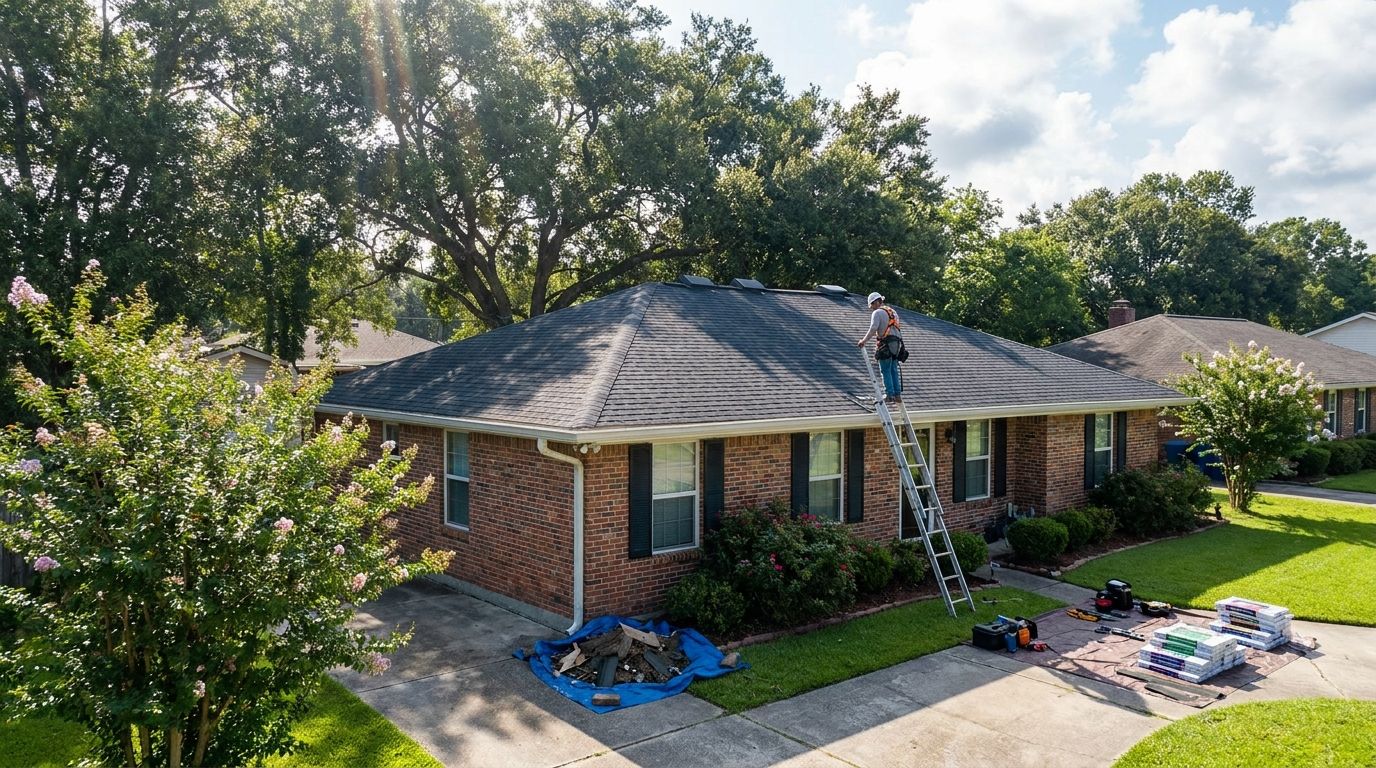
If you feel comfortable on a ladder, here is what to check up close. If not, give us a call and we will come do it for you.
- Shingle condition. Feel for brittleness and look for cracks. Asphalt shingles in Louisiana lose flexibility fast in our heat.
- Nail pops. Any raised nails should be hammered back and sealed. In high wind they become little levers that pop shingles off.
- Sealant around vents and pipes. The tar or caulk here gets hard and cracks after a few years. Hurricane winds will find every gap.
- Soffit and fascia. Make sure these are tight. Wind gets behind loose aluminum and peels it back, opening the attic to rain.
- Tree limbs. Any branch that hangs over or even touches the roof needs to be trimmed. They act like wrecking balls in a storm.
Attic and Interior Check
Get inside the attic with a good flashlight.
- Look for light coming through the roof deck. Any pinhole of daylight means a hole that rain will find.
- Check for water stains on rafters or decking. Old stains are okay if they are dry. Fresh ones mean you have an active leak.
- Feel the insulation. Wet insulation loses its ability to protect your home and can hide roof damage.
- Make sure your attic has proper ventilation. Good airflow keeps the roof cooler and helps shingles last longer in our hot summers.
Hurricane Straps and Roof Ties
A lot of folks ask whether adding hurricane straps requires a permit in Slidell. The short answer is yes. Any structural reinforcement to the roof usually needs a permit through St. Tammany Parish.
That said, the permit process is straightforward when you work with a licensed contractor. We handle the paperwork and make sure the straps are installed to current code. These metal connectors tie your roof trusses to the top plate of your walls. In a strong storm they can keep the roof from lifting off like a hat in the wind.
If your home was built before the stricter codes after Katrina, adding straps is one of the smartest upgrades you can make. We have seen them make the difference between a repairable roof and a total loss.
Metal Roofs vs Asphalt in Hurricane Season
Many newer homes in Slidell went with standing-seam metal after Ida. Metal roofs handle wind better when properly installed, but they still need attention.
- Check that all screws are tight and have their rubber washers intact.
- Look for dents or scratches that could become rust spots.
- Make sure the ridge vents and edge flashing are secure.
Asphalt roofs, which are still the majority here, rely on the sealant strip bonding each shingle to the one below it. Once that bond fails, the roof becomes a stack of cards in high wind.
What We Do Not Do
We will not tell you that you need a full replacement without getting on the roof and seeing it for ourselves. Some roofs just need repairs. Others have hidden deck rot that only shows up once we pull back the shingles. That is why we always start with a thorough inspection and a written estimate.
Timing Matters
The best time to get this work done is right now, in May or early June, before the real heat and before the first named storm forms. Waiting until a hurricane is in the Gulf means everyone is scrambling and prices go up. Getting ahead of the season keeps options open and crews available.
After the Checklist
Once you have walked through this list, you will have a clear picture of where your roof stands. Some issues you can handle yourself. Others need a professional eye.
If you find anything that concerns you, or if you simply want peace of mind before hurricane season, give us a call. We will come out, walk the roof with you, and give you a clear written estimate within 24 hours. No pressure, no sales pitch, just honest answers from a crew that has been through every major storm the Gulf has thrown at us.
We are fully licensed, insured, and bonded under Louisiana HI.565176. Our same crew starts and finishes every job, and we know how to work with insurance companies when claims come in. Whether you have a 15-year-old asphalt roof on a brick ranch in Olde Towne or a newer metal roof on a farmhouse out toward Pearl River, we have seen it and fixed it.
Slidell is part of our extended neighborhood. We live and work on the North Shore, and we treat every roof like it is our own.
Take a walk around your house this weekend with this checklist. Write down what you find. Then reach out if you want experienced eyes on it. We are happy to help you get ready for whatever this hurricane season brings.
Get a free estimate by visiting our contact page. We will schedule a time that works for you and give you straight answers about the condition of your roof.
Keep reading
Ready to talk through your roof?
Licensed Louisiana roofing contractor. Free assessments. No high-pressure sales.