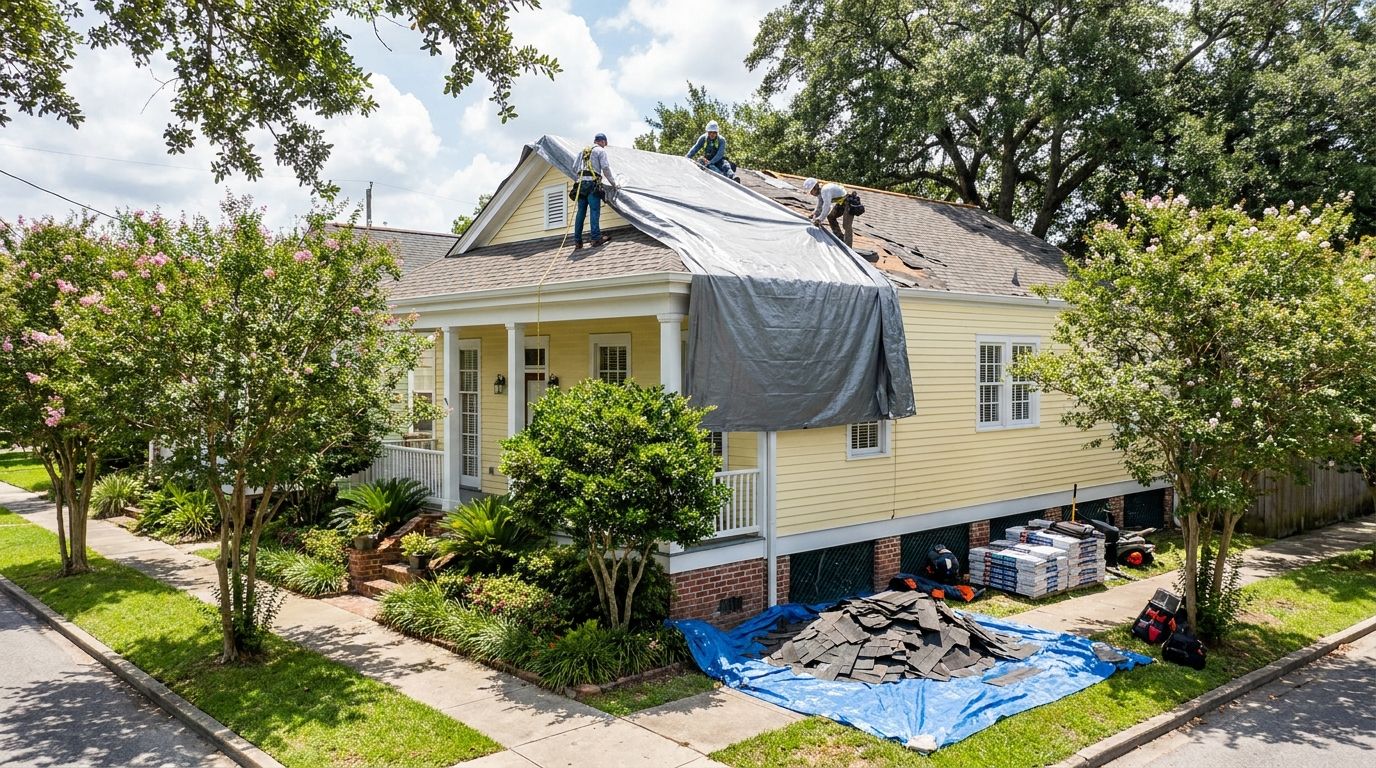
Tarping a Damaged Roof After a Storm in Greater New Orleans
By Clear Home Team · May 22, 2026
Why a damaged roof needs tarping right away
A strong line of thunderstorms or a tropical system can tear away large sections of shingles in minutes. Once the decking is exposed, rain finds its way inside fast. In Greater New Orleans that often means water in the attic, stained ceilings, and ruined insulation before the storm even clears.
Tarping seals the opening and buys time for a permanent fix. It is not a fancy solution, just a heavy reinforced plastic or rubber sheet fastened so wind cannot lift it. Done right, it keeps the house dry for weeks or even months while you work through insurance and scheduling.
Signs your roof needs emergency tarping
Walk outside after the wind dies down and look up. Missing shingles in large patches, torn underlayment, or visible decking usually means water is already entering. On the inside, ceiling stains that grow or new drips in the attic are clear warnings.
If you see any of those, get a tarp on as soon as it is safe. Waiting until the next rain often turns a repair job into a full replacement. We have walked plenty of West Bank and North Shore homes where a simple tarp would have saved thousands in interior damage.
How professional roof tarping is done
First we clear any loose debris so the surface is as clean as possible. Then the crew rolls out heavy-duty tarp material that overlaps the damaged area by at least four feet on every side. We fasten it with screws, battens, and sealant along the edges so it cannot flap or peel in the next gust.
On steeper pitches common in older New Orleans neighborhoods we add extra strapping. Flat roofs over additions get a different detail with perimeter sealant and sometimes sandbags to hold the edges. The goal is always the same: keep water out without creating a bigger problem later.
What to expect when we respond to your call
Our teams run 24/7 during storm season because that is when roofs fail. When you call we ask a few quick questions about the damage and your address so we can reach you safely. Most times we can have a crew at your door within a few hours once roads are clear.
We walk the roof with you, show exactly where the tarp will go, and explain how long we expect it to hold. After the tarp is secured we give you a written summary and photos for your insurance carrier. Many homeowners tell us the peace of mind is worth as much as the dry house.
Will insurance cover emergency roof tarping
In most cases yes. Louisiana carriers understand that a temporary tarp prevents further damage, which saves them money in the long run. We document the storm-related damage and the steps we took so your claim moves smoother.
We have helped more than a thousand Louisiana homeowners file and finish their claims. Our crew knows what adjusters look for and we stay on the job until the claim is paid and the permanent roof is finished. You do not have to fight the insurance company alone.
How long does a roof tarp last
A well-installed tarp can stay in place for three to six months without trouble. We have seen tarps we put up after past hurricanes still tight when the permanent roof crew finally arrived. Wind, sun, and repeated rain will eventually break down even the best material, so a tarp is never a permanent fix.
Check the edges every few weeks after a big storm. If you see lifting, new tears, or water stains inside, call us right away. We will come back out, re-secure or replace the tarp at no extra charge on jobs we originally tarped.
What we will not do with a tarp
We do not tarp roofs that are too far gone. If more than a third of the roof is missing or the decking is soft across large areas, tarping usually just delays the inevitable. In those cases we tell you straight that a full replacement is the smarter move and help you start that claim.
We also refuse to install a tarp if it is not safe for our crew. High winds, downed power lines, or flooding around the house mean we wait until conditions improve. Your safety and our crew’s safety come first every time.
Other steps to take after storm damage
While you wait for the tarp crew, move valuables away from exterior walls and place buckets under active leaks. Take clear photos of the damage from both inside and outside before any repairs start. These shots help your adjuster see the full picture.
Trim any broken tree limbs that could hit the house again. Make sure gutters are cleared so water does not pool against the fascia. Small jobs like these keep the situation from getting worse before we arrive.
Why local experience matters in Greater New Orleans
A roof in Lakeview handles different wind loads than one in Chalmette or on the North Shore. We have worked every parish around the city for more than twenty years. Our crews know which roof styles fail first in a hurricane and how insurance companies in this region typically respond.
We are GAF Certified, Owens Corning Preferred, and carry a HAAG Certified Inspector on staff. Our Louisiana license is current and we stay fully insured and bonded. When we leave your house you know the work meets code and will hold up to the next Gulf storm.
The same crew that puts on your tarp will be here when it is time to replace the roof. We do not hand jobs off to strangers. That continuity keeps communication clear and the final roof correct.
Tarping a damaged roof is one of the most practical steps you can take after a storm. It protects your family, your belongings, and your insurance claim. If you are dealing with roof damage right now, give us a call. We will come see what is needed and get a tarp on if that is the right move.
Get a free estimate by visiting /contact/. We respond fast and will walk your roof as soon as it is safe.
Keep reading
Ready to talk through your roof?
Licensed Louisiana roofing contractor. Free assessments. No high-pressure sales.