Best Roof Material for Hurricane Zones in Greater New Orleans
By Clear Home Team · May 22, 2026
When you have spent twenty-plus years putting roofs on homes from Metairie to the North Shore to the West Bank, you learn exactly what a Gulf hurricane can do. I have walked through neighborhoods the day after storms like Ida and seen asphalt shingles peeled back like old wallpaper. That is why folks around here ask me the same question every time another storm heads our way: what is the best roof material for hurricane zones?
The honest answer is there is not one perfect choice for every house. It depends on your home’s style, your insurance requirements, how long you plan to stay, and what your budget allows after the deductible. But a few materials clearly outperform the rest when the wind starts howling above 130 miles per hour.
Why wind resistance matters more than you think
Most people focus on the shingles or metal panels, but the real battle happens underneath. Your roof has to stay fastened to the deck, the deck has to stay fastened to the trusses, and everything has to shed water even after hours of sideways rain. In Greater New Orleans our building codes have tightened up since Katrina, and insurance companies now want proof that a roof can handle specific wind speeds before they will write a policy.
A standard three-tab shingle might be fine in Ohio. Around here it is a gamble. Once you start seeing sustained winds near 100 mph, those lighter shingles start lifting at the edges. That is when water gets underneath and the problems multiply fast.
Standing-seam metal roofs
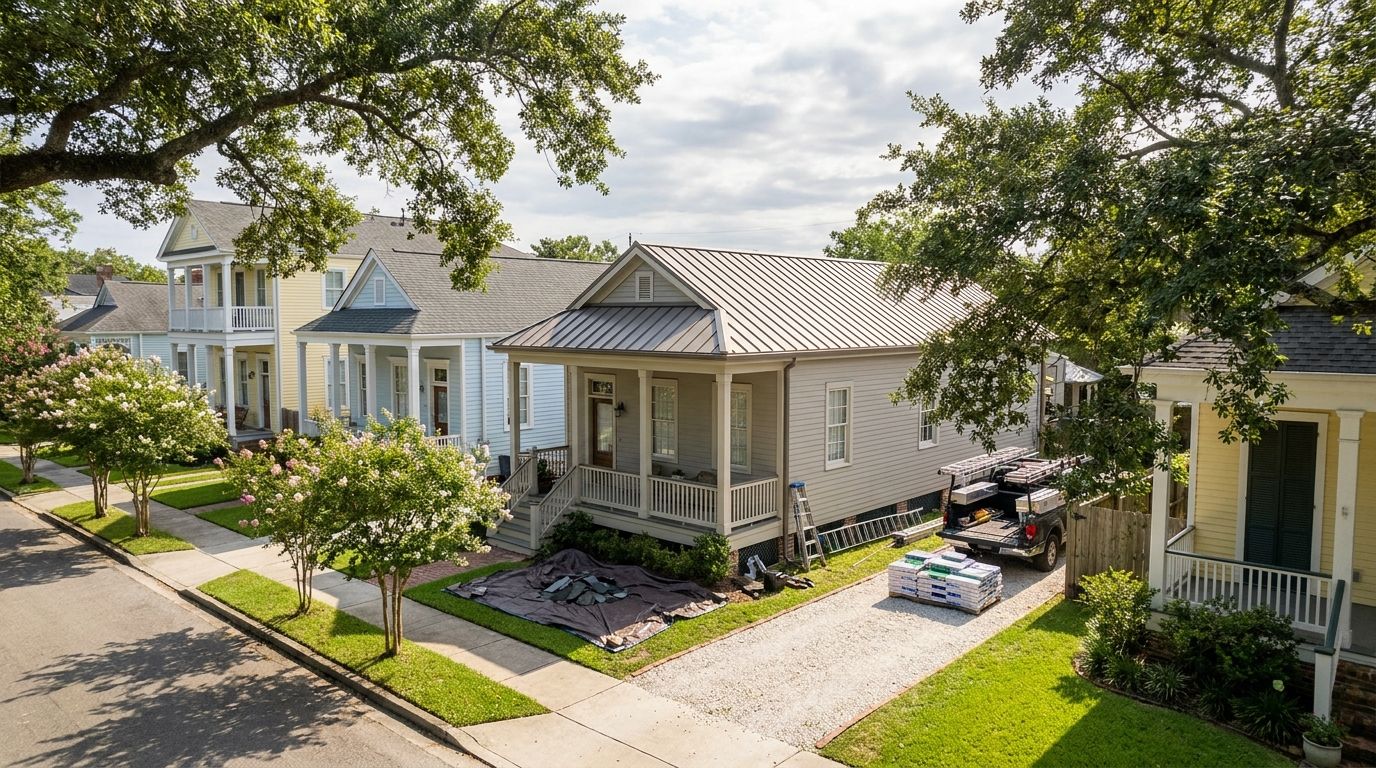
If I had to pick one material that handles Louisiana hurricanes better than anything else, I would point to properly installed standing-seam metal. These roofs use interlocking panels that run from ridge to eave with raised seams. When the wind hits, there is less surface area for it to grab.
We have replaced roofs with standing-seam metal on everything from raised cottages in Old Metairie to modern homes on the North Shore. The better systems carry ratings that let them handle 150 to 170 mph winds when installed with the right clips and underlayment. That is real peace of mind when a Category 3 or 4 storm is knocking on the door.
Metal also sheds water fast. After a hurricane passes, you do not have to worry as much about ponding or hidden leaks that show up weeks later. The biggest complaint I hear is the noise during heavy rain or hail, but most folks get used to it and many add extra insulation to quiet things down.
One thing to watch: not every metal roof is built the same. Some of the cheaper screw-down styles can loosen over time. We stick with standing-seam systems that use hidden fasteners and clips designed to allow for expansion and contraction in our hot summers.
Impact-rated asphalt shingles
Not every homeowner wants or can swing the cost of a full metal roof. That is where Class 4 impact-rated shingles come in. These are thicker, heavier shingles with a special fiberglass mat and tougher asphalt layer. They earn an impact rating that protects against hail and also adds wind resistance.
The question we get all the time is whether Class 4 shingles are worth it. In my experience, yes, especially if you are replacing after storm damage and your insurance will help cover the upgrade. They typically handle winds up to about 130 mph when installed with the right adhesive and fasteners. That covers most of the tropical storms and weaker hurricanes we see.
These shingles also carry the UL 2218 Class 4 rating for impact, which helps with insurance discounts in many parishes. We have put them on hundreds of ranch-style homes in Kenner, Terrytown, and Chalmette. They still look like a traditional shingle roof, so they fit neighborhood rules that sometimes push back on metal.
Keep in mind that even the best shingles need a solid deck and proper underlayment. We always check the plywood or OSB underneath before we start. If the deck is soft from years of leaks, no shingle in the world will save you when the next big wind comes.
Concrete tile roofs
Down on the West Bank and in some older neighborhoods you still see concrete tile roofs that have been around for decades. When these are installed right they hold up extremely well. The weight of the tiles actually helps keep them in place during high winds, and the individual tiles are nearly impossible to tear.
Modern concrete tiles come with clips and foam adhesives that boost their wind ratings into the 140 to 150 mph range. They also handle our intense sun without breaking down like some composites do. The downside is the weight. Your roof structure has to be engineered to carry that extra load, and not every older home can handle it without reinforcement.
We do not push tile on every job. But when a customer already has a tile roof or their HOA requires it, we make sure the underlayment is a high-quality synthetic that can take wind-driven rain. One hidden leak in a tile roof can rot the deck before you even notice water stains on the ceiling.
How much wind can a residential roof handle?
This is another question we hear often. Most newer homes in Greater New Orleans are built to handle at least 130 mph. Some of the upgraded systems we install test out at 150 to 170 mph. But those numbers assume everything was installed to code with the right fasteners spaced correctly.
After a storm I have seen roofs that were rated for 140 mph come apart because the contractor cut corners on the edge metal or skipped the proper sealant at the seams. That is why we still walk every roof ourselves and use crews who have been with us for years. The same guys who start your job finish it.
Insurance companies are paying more attention to this now. After Ida we worked with hundreds of homeowners to document wind damage versus poor installation. Having the right material and the paperwork to prove it makes the claims process much smoother.
What we look for during an inspection
When a customer calls after hearing about the next storm, we do not just sell them the shiniest new material. We look at a few key things first:
- The condition of the existing deck and underlayment
- The pitch and shape of the roof (hip roofs do better than gable ends in high wind)
- Whether the home has been updated to current wind codes
- Any HOA restrictions on materials
- The age and condition of flashing around chimneys and vents
These details matter more than picking the absolute strongest material on the market. A well-installed Class 4 shingle system on a properly prepped deck will often outperform a fancy metal roof that was thrown on in a hurry.
Maintenance tips that actually matter in hurricane season
No matter what material you choose, a few simple habits can keep your roof ready when the wind picks up. Clean your gutters twice a year so water has somewhere to go. Check the seals around plumbing vents and skylights every spring. Trim back any tree limbs that could hit the roof during a storm.
If you have a metal roof, we recommend checking the seams and screws after any tropical storm. With shingles, look for any that are curling or lifting at the edges. Catching small problems early keeps a minor repair from turning into a full insurance claim.
We also tell folks to keep a tarp and some basic plywood on hand. In the hours right after a big storm, being able to cover a damaged section quickly can save the inside of your house from major water damage.
Choosing what fits your home
Every neighborhood in Greater New Orleans has its own look. Some places on the North Shore lean toward standing-seam metal for the modern coastal feel. Older sections of the West Bank still favor tile or upgraded shingles to match historic styles. We have installed all of these systems and can walk you through the real differences in performance, looks, and long-term maintenance.
The key is matching the material to your house instead of just buying whatever the last storm victim on your block chose. That is where twenty years of local experience helps. We know what has held up through Ida, Zeta, and the smaller storms in between.
If you are thinking about replacing your roof before the next hurricane season really gets going, give us a call. We will come out, walk the roof, and give you a written estimate within 24 hours. No pressure, just straight talk about what will work best on your particular home.
We have helped more than a thousand Louisiana families through their insurance claims after storms. Our crews are local, fully licensed, and insured. Whether you need a full replacement or just want to know if your current roof can make it through another season, we are happy to take a look.
Getting the right roof material for hurricane zones is one of the smartest investments you can make in South Louisiana. It is not about chasing the newest trend. It is about picking a system that has proven it can handle the kind of weather we actually get here year after year.
Keep reading
Ready to talk through your roof?
Licensed Louisiana roofing contractor. Free assessments. No high-pressure sales.